Let’s be honest, the old way of just slapping listing photos on social media is dead. To actually win in today's market, you need a smart, repeatable system that grabs attention and, more importantly, generates real leads. It all boils down to a simple, three-part workflow: plan your content with your ideal client in mind, create visuals that tell a story, and then consistently show up to build a genuine community.
This isn't just about looking busy online; it's about turning your social media profiles into a predictable source of business.
Your Blueprint for Scroll-Stopping Real Estate Content
If you're ready to move beyond generic posts and start creating content that actually works, you're in the right place. Think of this guide as your practical playbook for turning passive scrollers into active, interested clients. We're going to cover the entire process, from figuring out what truly motivates your dream clients to producing eye-catching video tours in a matter of minutes.
The goal here is simple: build a magnetic online presence that doesn't just display properties, but tells their unique stories. For a broader look at the core principles, this article on how to create engaging social media content is a great starting point.
The process I use breaks down into three core stages, as you can see below.
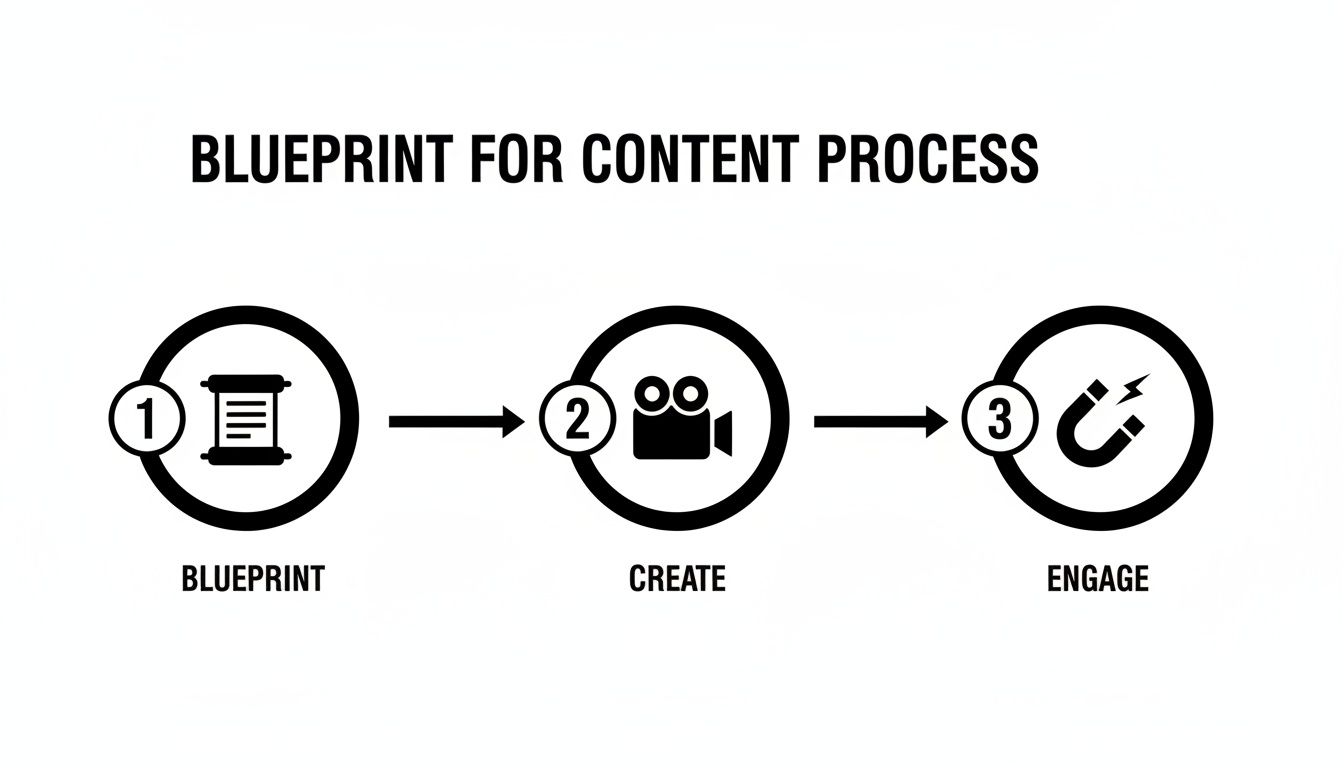
Think of it as Blueprint, Create, Engage. This is your roadmap for turning a simple idea into a powerful asset that starts real conversations.
To really nail this, it helps to understand what makes real estate content truly connect with people. It's not just about pretty pictures; it’s a mix of strategy, authenticity, and providing real value.
Table: Core Pillars of Engaging Real Estate Content
| Pillar | What It Means for Realtors | Why It Drives Engagement |
|---|---|---|
| Authenticity | Sharing behind-the-scenes moments, client success stories, and your genuine personality. | People connect with people, not just brands. Authenticity builds trust and makes you relatable. |
| Visual Storytelling | Using photos and video to show what it feels like to live in a home, not just its specs. | This helps buyers emotionally connect and envision their future, creating a much stronger desire. |
| Local Expertise | Showcasing your deep knowledge of neighborhoods, schools, and local hot spots. | You become the go-to resource for the community, not just for a single transaction. |
| Clear Value | Providing tangible tips, market updates, or guides that help buyers and sellers navigate the process. | It positions you as a helpful expert and gives people a reason to follow you long-term. |
By keeping these pillars in mind, you ensure every piece of content you create is working toward building your brand and attracting the right clients.
Why This Workflow Matters
In a world where almost everyone starts their home search online, having a structured content plan isn't just nice—it's essential. The numbers don't lie. Listings that feature video get a mind-blowing 403% more inquiries than those with just photos. And with 96% of home buyers using the internet in their search, your online presence is your new storefront.
By focusing on visual storytelling, you're not just selling a house; you're selling a future. You're helping potential buyers envision their lives within those walls, which is far more powerful than listing features on a flyer.
This guide gives you the exact tools and strategies you need to bring that vision to life. We'll get into the nitty-gritty of:
- Writing captions that spark conversations and get people to take action.
- Figuring out the best times to post for maximum reach on each platform.
- Mastering the art of crafting a narrative that makes a listing unforgettable.
Know Your Audience, Know Your Goals
Before you even think about your camera, let's talk about the single most important part of your social media plan: figuring out who you're talking to and what you want them to do.
It’s easy to get caught up in the "what" – the video ideas, the cool transitions. But without the "who" and the "why," you're just making noise. Good content isn't about shouting into the digital void; it's about starting a real conversation with a specific person.
Think about it. The content that grabs a first-time homebuyer in their late 20s is worlds away from what a retiree looking to downsize wants to see. One is nervous about down payments and bidding wars, while the other is focused on accessibility and community. Try to talk to both at once, and you’ll end up connecting with neither.
Go Deeper Than Demographics
"Millennials in Austin" isn't an audience. It's a starting point. To make content that truly hits home, you need to get personal. What are their hopes? What keeps them up at night? What are the real, human problems they’re facing on their real estate journey?
This is where you build out a client persona. Instead of a generic label, create a person.
Let’s imagine "First-Time Homebuyer Fiona." She’s 29, a graphic designer, and has been saving for three years. What are her actual pain points?
- She's terrified of a bidding war and feels like she'll never win.
- She's overwhelmed by the jargon and doesn't know who to trust.
- She secretly wonders if she's making a huge financial mistake.
See the difference? Now you're not just selling a house. You're creating content that solves Fiona's problems. You can make a video on "3 Ways to Make Your Offer Stand Out (Without Waiving Everything)" or a post demystifying closing costs. You're speaking directly to her fears and offering real help.
Pro Tip: Your client persona is your North Star. Before you create anything, ask yourself one simple question: "Would Fiona find this genuinely helpful?"
This focus is everything. It's how you stop creating generic content and start building real relationships that lead to real business.
Set Goals That Actually Matter
With a crystal-clear picture of your ideal client, you can set goals that move the needle. Let's be honest: "getting more likes" is a vanity metric. It feels good, but it doesn't pay the mortgage.
We need to shift from chasing vanity metrics to tracking business metrics. This is the mindset that separates the pros from the amateurs. It forces you to be strategic about every single post.
Here are a few examples of strong, measurable goals:
- Lead Generation: Generate 15 qualified buyer leads from Instagram Reels in the next 90 days.
- Audience Engagement: Increase my video saves by 30% this quarter. (This shows you're creating content people want to reference later!)
- Brand Authority: Book 3 new seller listing appointments per month directly from my local market update videos on Facebook.
- Website Traffic: Drive 500 clicks to my new listing page from social media in the first week.
Each of these goals gives you a clear target. You’ll know your video on "5 Common First-Time Buyer Mistakes" worked not because of the view count, but because of how many people DMed you asking for your free buyer's guide.
Putting in this foundational work—defining your audience and setting tangible goals—is the difference between just posting and posting with a purpose. Get this right, and every minute you spend creating content will be an investment in your business's growth.
Telling a Home's Story with Video
Let's be honest, a flat photo of a living room gets lost in the noise of a social media feed. It shows the facts—the size, the layout—but it doesn’t capture the feeling of a home. That's where video comes in. It’s not just about showing a property; it's about telling its story and letting a potential buyer feel like they're walking right through the door.
And you don't need a Hollywood-level camera to do it. Great visual storytelling is really about thinking like a director and crafting a narrative that guides your viewer on a journey. Do this right, and you'll turn a simple property tour into an experience that sticks with them long after they've scrolled past.
First Things First: Match the Format to the Platform
Before you even think about hitting record, you have to decide where this video is going to live. Every social media platform plays by its own rules, and the video's shape—its format—is the most important one.
You’ve seen it before: a beautiful landscape video squished into an Instagram Story with the sides awkwardly chopped off. It immediately screams, "This wasn't made for you," and people will swipe away in a heartbeat.
- Vertical (9:16): This is the king of Instagram Reels, TikTok, and YouTube Shorts. It’s a non-negotiable format built for a full-screen mobile experience. If you're trying to reach new people and get discovered, this is your primary tool.
- Square (1:1): Still a solid choice for standard in-feed posts on Instagram and Facebook. It commands a good amount of screen real estate and looks great without forcing someone to turn their phone sideways.
- Landscape (16:9): Save this traditional widescreen format for your more in-depth, longer tours on YouTube or for embedding directly on your website. It just doesn't work as well for the quick, casual scroll on your phone.
Always, always shoot with the final destination in mind. Trying to force a horizontal video into a vertical frame is a recipe for disaster—you’ll lose the best parts of the shot and compromise the entire story you're trying to tell. For a deeper dive, check out our comprehensive guide on real estate video marketing for more platform-specific tips.
Sequence Your Shots to Create an Emotional Pull
A great video tour doesn't just wander from room to room. It builds a story with a beginning, a middle, and an end. The sequence of your shots is how you control that narrative and create an emotional arc that pulls people in.
You have to start with a powerful hook. This needs to be the single most compelling, jaw-dropping feature of the property. Forget the front door (unless it's truly magnificent). Open with the stunning sunset view from the balcony, the unique stonework on the fireplace, or the sun-drenched breakfast nook that just feels like home. Those first three seconds are everything. They determine whether someone stops scrolling or keeps on going.
Once you’ve got their attention, you can guide them through the space.
- Set the Scene: After that initial hook, show how the rooms connect. A smooth shot that moves from the gourmet kitchen into the open-concept living room helps people mentally map out the floor plan.
- Highlight the "Wow" Factors: Dedicate specific shots to the details that make the property special. Zoom in on the waterfall quartz countertop, the custom-built walk-in closet, or that incredible spa-like master bath.
- Show the Lifestyle, Not Just the Space: Empty rooms can feel a bit sterile. Add shots that hint at life being lived there—a book resting on a nightstand, a vase of fresh flowers on the counter, or patio chairs arranged around a fire pit for a cool evening.
- End with a Lasting Impression: Your closing shot should circle back to the home's biggest selling point. This could be a return to that incredible view, a dramatic twilight shot of the exterior, or a final, inviting look at the backyard pool.
When you sequence your content this way, you’re doing more than just documenting a house. You're crafting an experience. You're helping potential buyers see their own lives unfolding in that space, and that’s what creates a real, lasting emotional connection.
Use AI to Turn Photos into Cinematic Videos in Minutes
I get it—producing high-quality video for every single listing feels like a massive chore, especially if you don't have a videographer on speed dial. This is where AI-powered tools like AgentPulse can be a total game-changer. You can create dynamic, professional-looking videos using just the listing photos you already have.
The interface is incredibly simple—you just upload your photos and let the tech do the work.
What used to take hours of editing is now a straightforward, three-step process that you can knock out in just a few minutes.
Tools like this use a 3D-aware engine that analyzes your high-res photos, reconstructs the space, and then automatically creates cinematic camera movements. Think smooth pans, slow dolly shots, and dramatic reveals that make it feel like a professional film crew was on site. You get that high-end look for your listings without the high-end cost or time commitment.
The real win here is consistency and speed. You can churn out a polished video for every property, ensuring your brand always looks top-notch across all your social channels. And the data backs this up. According to Dash Social's 2025 Social Media Benchmark Report, real estate pros who post more frequently see a huge engagement boost, including a +26% increase in video views and an incredible +68% jump in shares. You can read the full report on social media performance to see more benchmarks that can help elevate your strategy.
Writing Captions and CTAs That Actually Convert
A gorgeous video will stop the scroll, but it's your caption that turns a curious viewer into a hot lead. Think about it: the visuals grab their attention, but your words are what inspire them to take action. It’s time to graduate from flat, fact-based descriptions like "3 bed, 2 bath" and start writing copy that sells the dream, not just the square footage.
This is your chance to make an emotional connection and gently guide your audience to the next step. A well-written caption is the bridge between someone just passively looking and actively reaching out. Honestly, mastering this skill is one of the most important things you can do to make your social media efforts pay off.
Hook Them with the First Line
Let's be real, most platforms hide the bulk of your caption behind a "see more" link. That means your very first sentence is the most valuable real estate you have. Its only job is to make someone stop and click to read the rest. Don't waste it on the address or the price.
Instead, lead with an emotion, a question, or a statement that paints a picture and sparks their imagination right away.
- Weak Opening: "New listing at 123 Maple Street."
- Strong Opening: "Imagine spending your summer evenings on this exact porch."
See the difference? The second one doesn't just state a fact; it invites the viewer into a lifestyle. You're helping them see themselves in the space, which is an incredibly powerful sales tool.
Crafting the Body of Your Caption
Once they're hooked, you can start to weave in the essential details. But even here, your goal is to tell a story. I always recommend using short, punchy paragraphs and even bullet points to highlight the best features. It makes the information easy to digest on a small screen.
Your caption should answer the questions your audience hasn't even thought to ask yet. What makes this home special? Who is it perfect for? Why should they care about this property over all the others in their feed?
For instance, instead of just listing "updated kitchen," try describing the experience. "The morning light just floods this kitchen, making it the perfect spot for your first cup of coffee." This approach helps people connect on a much deeper, more emotional level. You can also increase your social media engagement by asking questions in the caption itself to get a conversation started in the comments.
Master Your Hashtag Strategy
Hashtags are basically the search engine for your content, helping you reach people who don't follow you yet. A huge mistake I see agents make is using only massive, generic tags like #RealEstate. While those have a purpose, a smart strategy uses a mix of different hashtag types to really maximize your reach.
- Broad Industry Tags: These are high-volume tags that get your content into the wider conversation (e.g.,
#RealtorLife,#NewListing). - Niche & Location Tags: These are more specific and help you connect with a targeted local audience who are your actual potential clients (e.g.,
#DowntownLoftLiving,#AustinRealtor,#EastNashvilleHomes). - Branded Tags: Come up with a unique hashtag for your business or a specific listing series to build brand recognition over time (e.g.,
#HomesByAgentJane).
I've found the sweet spot is a blend of 5-10 highly relevant hashtags. This combination ensures your content gets seen by a big audience and the local buyers who are most likely to turn into clients.
The All-Important Call to Action
Okay, your content has done its job—it grabbed their attention and made them want the home. Now what? You have to tell them exactly what to do next. A missing or vague Call to Action (CTA) is probably the single biggest missed opportunity in social media marketing.
Your CTA needs to be direct, simple, and easy. Don't make people guess what you want them to do.
Examples of Powerful CTAs for Realtors:
- "Ready for a closer look? Tap the link in my bio for the full 3D tour."
- "Know someone perfect for this home? Share this post with them!"
- "DM me 'TOUR' to schedule a private showing this weekend."
- "Which room is your favorite? Let me know in the comments below!"
Notice how each one gives a clear, single instruction. Asking someone to "like, comment, share, and click the link" is just too much. Pick one primary action you want the viewer to take and make it incredibly easy. This one simple change can completely transform how many leads you get from every single post.
Developing a Smart Posting and Distribution Plan
Let's be real. Creating a stunning video tour or a heartfelt client testimonial is only half the job. If your ideal clients never actually see it, all that effort just disappears into the digital void. A smart distribution plan is what turns great content into actual business—it’s how you make sure your message lands in front of the right people at the perfect time.
This isn’t about just blasting your content across every platform you can think of. It’s about being strategic. You have to understand where your audience spends their time and then tailor your approach to fit the unique vibe of each channel.

Choosing the Right Platform for Your Goals
Every social media platform has a different role to play in your real estate marketing. One of the most common mistakes I see agents make is spreading themselves too thin. Instead, focus your energy where you’ll get the biggest bang for your buck.
Instagram & TikTok: These are your visual powerhouses. They are built for discovery and are absolutely perfect for short-form videos like property tours, neighborhood highlights, and behind-the-scenes moments. Their algorithms are designed to push engaging content to new audiences, making them fantastic for building your brand and attracting new followers.
Facebook: While its organic reach isn't what it used to be, Facebook is still a critical hub for connecting with your community and running targeted ads. It’s the ideal place for sharing market updates, client success stories, and local event info with your existing network. Plus, Facebook Groups are an incredibly powerful tool for establishing yourself as the go-to local expert.
Think of it this way: Instagram and TikTok are for attracting new eyeballs. Facebook is for nurturing the relationships you already have with people who know, like, and trust you.
Pinpoint Your Peak Posting Times
Posting when your audience is most active is probably one of the simplest tricks to boost your content’s initial performance. The algorithms love posts that get immediate engagement, so timing really matters.
But don't just rely on some generic "best times to post" article. Your audience is unique. The best data is your own data.
Dive into your Instagram Insights or TikTok Analytics. Both platforms give you incredibly detailed breakdowns of when your followers are online, right down to the specific day and hour. This isn't guesswork; it's using real data to be strategic.
Start looking for patterns. Are your followers scrolling during their lunch break on weekdays? Or are they more active on Sunday evenings? Schedule your most important posts—like that brand-new listing reveal—for these peak windows to give them the best possible chance to take off.
Build a Consistent Content Calendar
Consistency is everything on social media. If you post sporadically, you're telling the algorithm you're not a reliable source of content, and that can tank your visibility. A content calendar is your absolute best friend here. If you want to go deeper, check out our guide on building a real estate social media calendar.
Planning your content just a week or two ahead of time takes away that daily "what on earth do I post today?" panic. It also helps you build a more balanced and interesting feed. A good content mix keeps your audience coming back for more and positions you as a well-rounded expert, not just a salesperson.
Here’s a sample weekly structure to get you thinking:
| Day | Content Theme | Example Post Idea | Goal |
|---|---|---|---|
| Monday | Market Insight | A Reel explaining a recent shift in local interest rates. | Establish Expertise |
| Tuesday | Property Showcase | A cinematic video tour of a new listing. | Generate Leads |
| Wednesday | Behind-the-Scenes | A quick story showing you staging a home for photos. | Build Authenticity |
| Thursday | Client Testimonial | A carousel post with a photo of happy clients and their quote. | Build Social Proof |
| Friday | Community Spotlight | A post about your favorite local coffee shop or park. | Nurture Community |
A simple framework like this ensures you're doing more than just selling. You're providing value, building trust, and creating the kind of content that makes people actually want to follow your journey. This is how you turn your social profiles from a static portfolio into a dynamic, lead-generating machine.
Measuring Your Success and Refining Your Strategy
 Creating great social media content is a cycle, not a one-and-done task. You can't just post into the void and hope for the best. To really make this work, you have to put on your analyst hat and let the data tell you what your audience actually wants to see.
The real goal here is to get past the "vanity metrics" like likes. Sure, a high like count feels good, but it doesn't pay the bills or sell houses. We need to focus on the numbers that show genuine interest and intent.
Focusing on Metrics That Matter
If you want to know the real impact of your social media, you have to track the right data. These are the numbers that give you a direct line of sight into whether your content is hitting those business goals you set from the start.
Here's what you should be keeping a close eye on:
- Video Completion Rate: Did people watch your whole 30-second tour, or did they bounce after five seconds? A high completion rate is a clear sign that your storytelling is on point.
- Shares and Saves: These are gold. A share means someone thought your post was so valuable they staked their own reputation on it by sending it to their friends. A save means they see it as a resource to come back to.
- Website Clicks: This is a big one. How many people are actually tapping that link in your bio to see the full listing? This metric is your bridge between social media chatter and real lead generation.
- Inbound DMs and Comments: Are people sliding into your DMs to ask about a property or inquiring about your services in the comments? This feedback is just as crucial as the hard numbers.
By digging into these deeper metrics, you get a much sharper picture of what resonates. You might find that your quick-cut reels get 40% more saves than your longer, cinematic tours. That’s invaluable intel for your next video shoot.
The Power of the Monthly Review
Block out just one hour at the end of each month to go over your analytics. Trust me, this simple habit is the secret to getting better and better. Just pull up your platform insights and ask some honest questions.
Which posts sent the most traffic to your website? What was the topic, the format, the call to action? Which videos got the most shares? Was it that market update or the behind-the-scenes property tour? When you look at your top performers, you'll start to see patterns you can lean into.
This isn’t about critiquing what you've already done; it’s about making your future strategy smarter. The insights you gather will help you create more of what works, ensuring your time and effort actually turn into real business.
Questions Agents Are Always Asking
So, How Often Should I Actually Be Posting?
Look, consistency beats frequency every single time. Don't burn yourself out trying to post multiple times a day.
A solid goal is 3-5 high-quality posts a week. This is manageable and gives you enough runway to mix things up with property tours, local market stats, and those all-important client testimonials. Plan it out, and you'll never feel that last-minute panic.
What Kind of Content Really Works for Real Estate?
If you're not doing video, you're falling behind. It's really that simple. Short-form video, like the 15-60 second clips you see on Instagram Reels and TikTok, is pure gold for grabbing attention and showcasing a property's best features quickly.
But don't forget the power of proof. "Just Sold" posts and client success stories aren't just filler content; they're your most powerful trust-building assets. They show potential clients you get the job done.
The secret sauce? Content that answers questions, solves problems, or paints a picture of a better future for your clients. Lead with value, and the engagement will naturally follow.
I'm Not a Videographer. How Can I Create Pro-Level Videos?
This is where smart tools come into play. Modern AI video creators are a lifesaver for busy agents. They can take the professional listing photos you already have and stitch them into a smooth, cinematic video with slick pans and transitions.
You can drop in some great royalty-free music, add your logo, and have a polished video ready in just a few minutes. It gives you the professional edge you need for every single listing, without the headache and cost of a full video shoot.
Ready to turn your listing photos into videos that actually get noticed? AgentPulse builds cinematic tours that stop the scroll and get people asking questions. Start creating for free today at AgentPulse.ai.