Let's be honest: video isn't just a nice-to-have in real estate anymore. It's become a must-have for capturing a buyer's attention and getting serious offers in the door. By turning your standard listing photos into a dynamic video, you create an experience that lets potential buyers connect with a property before they even book a showing.
It's not just about looking flashy; it's about being effective and getting ahead.
Why Video Listings Give You a Serious Edge
In a market flooded with listings, you have to do something different to get noticed. Great photos are the standard, but a video gives you a clear advantage. It offers a much more complete and engaging look at a home, telling a story as it guides viewers through the layout and spotlights the best features.
And this isn't just a feeling—the results are undeniable. The data shows listings with video tours can attract an incredible 403% more inquiries than listings with just photos. On top of that, agents who use video report that their properties sell up to 31% faster.
Even with these incredible stats, only about 9-10% of agents are consistently creating video listings. That’s a huge opportunity for you to step up and stand out from the competition. You can find more compelling real estate video statistics on photoup.net.
Building That All-Important Emotional Connection
A video can do something photos struggle with: it creates an emotional bridge between a buyer and the home. By simulating a walk-through, you help viewers picture themselves living there—cooking in the kitchen, relaxing in the living room, enjoying the backyard. That personal connection is what turns a casual browser into a motivated buyer.
Think about it this way:
- Photos show you what a room looks like.
- Videos show you what it feels like to live there.
This is exactly why 73% of homeowners say they're more likely to list with an agent who uses video. It shows you’re a modern, forward-thinking agent who will market their property in the best possible way.
The real goal of a video listing isn't just to show off a house. It's to make a potential buyer feel like they're already home. That's the emotional hook that leads to serious inquiries.
A Clear Return on Your Investment
It's easy to see video as just another expense, but that's the wrong way to look at it. It's a smart investment in your business, your brand, and your listings. The faster sales and higher inquiry numbers from video marketing have a direct impact on your income.
For a deeper look, check out our complete guide on video marketing for real estate agents.
Let’s look at a side-by-side comparison of how video truly stacks up against static images.
How Video Outperforms Static Images in Real Estate
This table breaks down the clear performance gap between listings that use video and those that don't. The difference is stark.
| Metric | Photo-Only Listings | Video Real Estate Listings |
|---|---|---|
| Buyer Engagement | Moderate; relies on viewer imagination. | High; creates an immersive, guided tour. |
| Lead Generation | Standard inquiry rates. | Up to 403% more inquiries. |
| Time on Market | Standard selling timeline. | Up to 31% faster sales. |
| Brand Perception | Meets basic expectations. | Modern, professional, and tech-savvy. |
In the end, using video isn't about chasing a trend. It's about using a proven tool to sell homes faster, attract more clients, and build a reputation as a top agent in a very competitive field.
Telling a Story With Still Photos
A powerful video listing is born long before you even touch a piece of software. It all starts with the story you want to tell. When you're working with still images, you have to put on your videographer hat and think about how to guide a buyer through the home in a way that feels completely natural and connects with them on an emotional level.
The very first thing you need to do is pick your assets. Let's be clear: not every picture from the professional shoot should make it into the video. Be ruthless. Only select photos that are high-resolution, perfectly lit, and tack-sharp. Anything blurry or poorly composed will immediately cheapen the final video and make the listing look amateur.
Building Your Visual Narrative
You need to think of this video as a virtual showing. The order of your photos should follow the same logical path you'd take if you were walking a client through the front door. You want to avoid any confusing jumps, like showing the front door, then the master bath, then jumping back to the kitchen. That’s just jarring.
A flow that has always worked well for me looks something like this:
- The Approach: Kick things off with a killer exterior shot. This is all about curb appeal.
- The Welcome: Next, move right inside to the entryway or foyer. You want to create that "welcome home" feeling.
- The Heart of the Home: From there, guide them into the main living areas—the living room, dining room, and kitchen.
- Private Quarters: Now you can transition to the bedrooms and bathrooms, showing off the more personal retreats.
- The Lifestyle: Always finish strong with the outdoor spaces. Show them the patio, the backyard, or that amazing pool area.
Following this kind of progression helps the viewer build a mental map of the house. They start to understand the layout and see how one room flows into the next. Each image should build on the one before it, making the tour feel seamless and engaging. For more on getting the right photos from the start, check out these professional real estate photography tips.
Finding Your "Hero Shots"
As you sort through your best photos, a few will undoubtedly stand out. These are what I call your "hero shots"—the images that perfectly capture the property's most stunning features. These are the showstoppers, the ones that make a potential buyer stop scrolling dead in their tracks.
A hero shot isn't just a picture of a room; it’s a snapshot of a lifestyle. It’s the chef's kitchen with sunlight streaming in, the serene backyard with a perfectly placed fire pit, or the primary suite with a spa-like bathroom.
Your video needs to give these shots the attention they deserve. Maybe you let a hero shot linger on the screen for an extra second, or perhaps you use one for a powerful opening or closing image. Don't be afraid to let these standout photos breathe. A video built around two or three incredible hero shots will always outperform one that rushes through twenty mediocre ones.
Creating Emotional Momentum
The final piece of the puzzle is ordering your photos to create an emotional journey. This isn't just a checklist of rooms; it's an experience you're crafting to build excitement and forge a real connection.
Think about it like this: start with an intriguing wide shot of the home's beautiful facade. Then, move inside to the open-concept living space to create a feeling of warmth and possibility. Build the energy by revealing that brand-new, jaw-dropping kitchen. Follow that with a moment of calm—a shot of the tranquil primary bedroom. Finally, deliver the grand finale with the expansive backyard, leaving viewers picturing themselves hosting summer barbecues with friends and family.
This kind of deliberate sequencing turns a simple slideshow into a compelling story. It helps buyers move past just seeing the house and start feeling what it would be like to live there. That's how you turn a video listing from just another piece of marketing into a genuinely powerful sales tool.
How AI Creates a Cinematic Experience
This is where the real magic happens. You’ve already done the hard work of picking your best photos and sketching out a story. Now, it's time to bridge the gap between that static photo gallery and a video that actually pulls people in. AI-powered tools are what transform those still images into a fluid, cinematic journey through the home.
We're not talking about a basic slideshow here. This process is far more sophisticated, using intelligent analysis to breathe life and movement into every single frame. It’s the secret sauce that makes your video real estate listings feel high-end and keeps a buyer's eyes glued to the screen.
Bringing Still Photos to Life With Motion
The heart of this whole process is creating movement where there was none. A smart AI tool doesn't just slap a generic pan or zoom effect on a picture and call it a day. Instead, it actually analyzes the image to understand its composition—identifying the foreground, the background, and the key features you want to highlight, like that gorgeous fireplace or the waterfall kitchen island.
From there, the software intelligently applies cinematic movements that a professional videographer would use.
- Parallax Pans: The AI creates a subtle 3D effect by moving the foreground and background at slightly different speeds. It adds a surprising amount of depth and realism, and it works beautifully in rooms with distinct layers, like a living room with a couch up front and a great view out the window behind it.
- Dolly-Ins and Dolly-Outs: This is a classic camera move that slowly pushes toward or pulls away from a subject. The AI can use this to gently guide the viewer’s eye toward a specific detail, like the custom tilework in a bathroom or the high-end appliances in the kitchen.
- Reveal Shots: This is a great way to build a little drama. The AI might pan across a foreground object—say, a partial wall or a piece of furniture—to slowly reveal the main living space. It builds anticipation and makes seeing the room for the first time that much more impactful.
This thoughtful application of movement is what truly elevates a video made from photos. It gives the viewer the feeling of physically walking through the space, creating an immersive experience that a flat image just can't deliver.
The point of AI-driven motion isn't just to make pictures move. It's to direct the viewer's gaze and tell a story within each frame, shining a spotlight on what makes the property special.
This quick chart shows you where this step fits into the overall workflow.
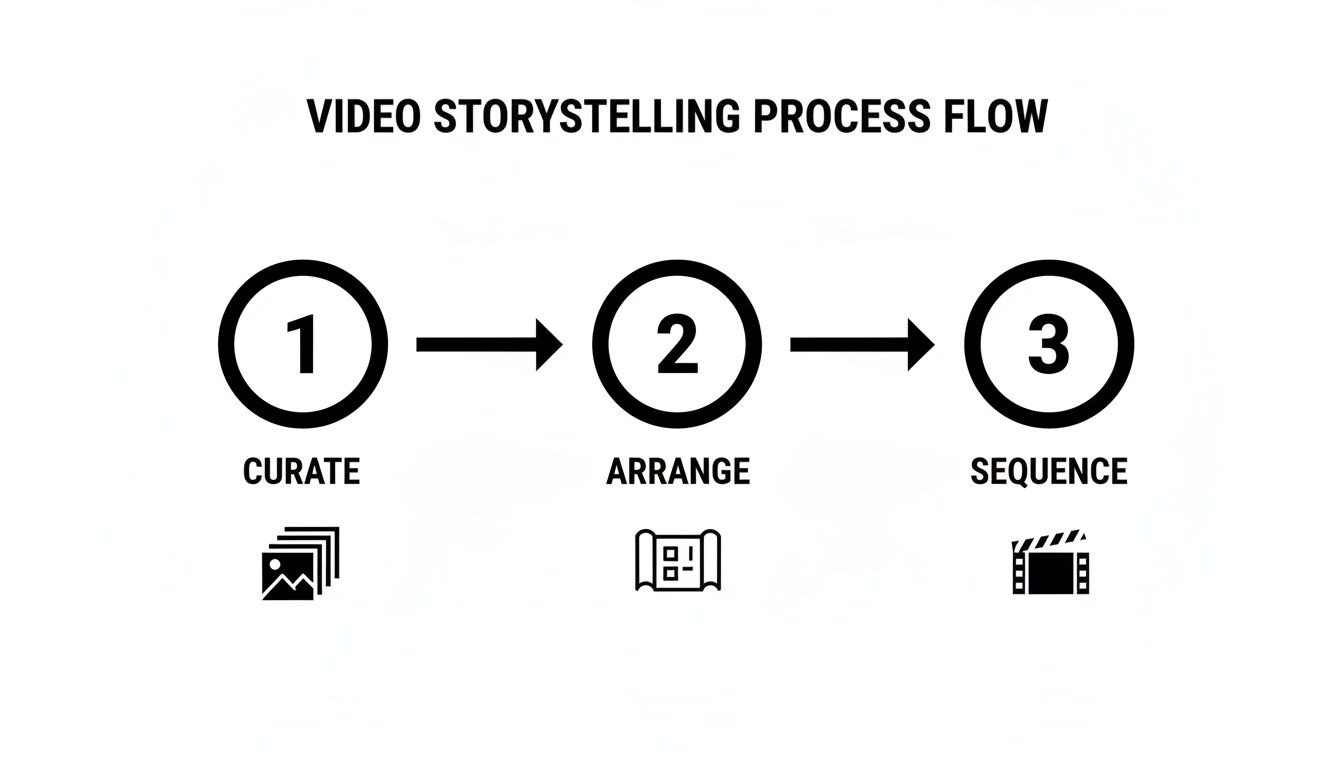
As you can see, once you've curated your shots and arranged them logically, adding this cinematic motion is the final creative touch that turns your plan into a polished video.
Sequencing and Pacing for Maximum Impact
After each photo is turned into its own short, moving clip, the next piece of the puzzle is sequencing them into a story that flows. While the AI can help assemble the clips, your strategic eye is still the most important part. The pacing—how long each clip is on screen—is what really sets the emotional tone.
A faster pace with quick cuts can create a sense of energy and excitement, perfect for a chic downtown condo. On the other hand, slower transitions and longer shots give off a feeling of calm and sophistication, which is a great fit for a luxury estate or a peaceful suburban home. Play around with the timing until it matches the property's unique personality. For more practical advice on finding the right software, check out our guide to the best real estate video app options out there.
Choosing the Perfect Soundtrack
Music isn't just background noise; it's the emotional engine of your video. The right track can completely shift how a buyer feels about a home. A huge mistake I see agents make is grabbing a popular song off the radio. That's a surefire way to get your video flagged or taken down from social media and even the MLS.
You have to use royalty-free music. The good news is that most modern video tools, like AgentPulse, come with a built-in library of licensed tracks you can use without worry.
Here’s a simple cheat sheet for matching music to the home's vibe:
- Modern & Urban: Look for something upbeat and electronic or maybe some indie pop.
- Classic & Traditional: Light orchestral pieces or calm acoustic guitar always work well.
- Family-Friendly & Suburban: A warm, uplifting, and slightly playful tune is a great choice.
- Luxury & High-End: Think sophisticated—cinematic scores, ambient tracks, or classical music.
Always listen to a few options while watching your video. The right one will just feel right. It will elevate the visuals without distracting from them.
Adding Your Professional Branding
The final touch is to stamp the video with your professional brand. This is more than just tacking your logo on at the end. It's about making the video a recognizable part of your marketing machine.
Your branding package should include three key things:
- Your Logo: You can place it subtly in a corner for the duration of the video or feature it more prominently on an intro and outro slide.
- Your Contact Information: Make sure your name, brokerage, phone number, and website are crystal clear on the final slide. Don't make people hunt for it.
- A Call to Action: End with a simple, direct instruction. "Schedule a Private Tour" or "Visit Our Website for More Details" works perfectly.
These elements transform your video from a simple property tour into a lead-generating asset. It reinforces who you are as a professional and makes it dead simple for an interested buyer to take the next step.
Getting Your Video Seen on Every Platform

Making a great video is a huge win, but it's really only half the battle. A truly effective video real estate listing is one that actually gets seen by the right people, on the right platforms, and in the right format. Just uploading the same video file everywhere is a rookie mistake that can seriously tank your reach.
Every platform, from your local MLS to Instagram, has its own set of rules and, more importantly, its own audience expectations. Nailing the optimization for each one is what separates the listings that get lost in the feed from the ones that generate real, qualified leads. It all comes down to thinking strategically about the little details—like aspect ratios, titles, and descriptions—before you even think about hitting "publish."
Master the Aspect Ratios
An aspect ratio is just a technical term for the shape of your video—its width versus its height. Getting this wrong makes your hard work look amateurish, slapping awkward black bars on the sides or, even worse, cropping out the best parts of the shot. To really make an impact, you’ve got to export a few different versions.
I know, that sounds like a headache. But modern tools like AgentPulse make it easy to re-render your project in different shapes without having to start from scratch.
Here are the three formats you absolutely need to create:
- Landscape (16:9): This is your classic widescreen format. It’s the go-to for YouTube, most MLS systems, and for embedding on your own website. It gives you that wide, cinematic feel that’s perfect for showing off the full scope of a property.
- Vertical (9:16): Think tall and skinny—this is the full-screen format built for phones. It is non-negotiable for Instagram Reels, TikTok, and YouTube Shorts. These platforms are designed for vertical video, and using it means your listing fills the entire screen for a totally immersive experience.
- Square (1:1): The classic square is still king for posts on the main Instagram grid and the Facebook feed. It simply takes up more screen real estate while someone is scrolling, making it far more eye-catching than a shrunken-down landscape video.
Creating a video in all three formats isn't just a "nice-to-have" anymore; it's a necessity. You're meeting buyers where they already are and giving them an experience that feels native to the platform they're using.
Get Smart With SEO for YouTube and Your Website
You have to start thinking of YouTube as the world's second-biggest search engine. When potential buyers are exploring a new area, their search often starts there. This is precisely why your video’s title and description are so critical—they’re how you tell the YouTube algorithm (and Google) what your video is about.
Your YouTube title needs to be crystal clear and packed with keywords a real buyer would actually type into the search bar.
Generic Title: 123 Main St
Optimized Title: Stunning Modern Farmhouse Tour | 123 Main Street, Anytown, USA | Real Estate for Sale
In the description, echo the key details from the title and then expand on them. Include the full address, bullet points of key features ("4 bedrooms, 3 baths, chef's kitchen, saltwater pool"), your contact info, and a direct link back to the property's listing page on your website. This not only helps buyers find what they need but also drives incredibly valuable traffic back to your own turf.
Win on Social Media With Smart Hashtags and Thumbnails
When you shift over to platforms like Instagram and Facebook, the game changes from search optimization to pure, unadulterated attention-grabbing. On social, compelling thumbnails and the right hashtags are your most powerful tools.
Hashtags are the discovery engine of social media, helping people interested in your local market stumble upon your content. Don’t just throw in generic tags; you need a layered strategy.
An Effective Hashtag Mix:
- Broad:
#realestate#realtorlife - Niche:
#hometour#newlisting#luxuryrealestate - Hyperlocal:
#[YourCity]RealEstate#[NeighborhoodName]Homes#[YourState]Realtor
Finally, before you post, always select a custom thumbnail. This is the still image people see before they decide whether to press play. Find the absolute "hero shot" of the property—that jaw-dropping kitchen, the perfectly manicured backyard, or the stunning curb appeal. A great thumbnail is what stops the scroll.
The impact of optimizing your video is massive. We're talking about a potential 157% boost in organic traffic from search engines and 1200% more social shares than you'd get from text and images alone. With over 650 million unique viewers watching real estate content on platforms like YouTube—where 51% of buyers now start their search—a one-size-fits-all approach just doesn't cut it. To dig deeper, you can explore more of these powerful real estate video trends and their impact.
Get Your Video Listing Seen: A Smart Distribution Strategy
You’ve put in the work and created a killer video. That’s a huge win, but the job's not done yet. A great video only works its magic when the right people actually see it. Getting it in front of motivated buyers is what turns a cool asset into a lead-generating machine.
Think of it this way: just posting your video online and hoping for views is like printing a stack of gorgeous property flyers and leaving them on your desk. You have to get out there and hand them to the people who matter. That means being strategic about every single place your video can live, from the MLS to a potential buyer's inbox.
Start With the Essentials: The MLS and Your Website
Your first move, always, should be the MLS. It’s the home base for every serious agent and buyer in your market. Make sure your video is front and center. Most MLS platforms now have dedicated fields for virtual tours or video links, and these often feed directly into major portals like Zillow and Realtor.com. Don't bury it.
At the same time, get the video up on your own website. Your site is your digital storefront, and embedding the video right on the listing page is a fantastic way to keep visitors hooked. Longer engagement time is a great signal to search engines, plus you have complete control over how it looks. You can frame it with a fantastic description and a clear call-to-action to book a showing.
Your video doesn't just sell the house—it sells you. When potential sellers see you going the extra mile with high-quality video, they know you’re the kind of agent who gets results. It's one of your best tools for winning that next listing.
And the proof is in the numbers. A staggering 73% of homeowners say they are more likely to list with an agent who uses video. It's not just about looking good, either; marketers who use video grow their revenue 49% faster than those who don't. You can dig into more stats over at Keeping Current Matters.
Cast a Wider Net with Social Media and Email
Once your foundation is solid, it's time to create some buzz. Social media is perfect for grabbing the attention of a broader audience—including those "passive buyers" who weren't even looking until your amazing listing popped up in their feed.
Post the vertical version on Instagram Reels or TikTok and share the square or widescreen version on your Facebook feed. The goal is to meet people where they are, in the format they prefer.
And don't forget about email. It’s still one of the most direct and personal ways to reach your network.
- Send a "Just Listed" Announcement: Craft an email that puts the video right at the top. A subject line like "Video Premiere: Your First Look Inside 123 Maple Street" is hard to ignore.
- Feature it in Your Newsletter: If you send out a regular newsletter, include a clickable thumbnail of the video. It’s a softer touch that keeps your sphere in the loop.
- Reach Out to Other Agents: You know the top agents who work with buyers in your property's price range. Send them a personal email with the video link—it makes their job easier and gets your listing more visibility.
To make sure you're hitting all the right spots, here's a quick checklist to keep handy.
Video Distribution Channel Checklist
This table breaks down the essential channels for sharing your video listings and what you need to do for each one to get the best results.
| Platform | Optimal Format | Key Action |
|---|---|---|
| MLS | Horizontal (16:9) | Add link to the "Virtual Tour" or "Video" field for portal syndication. |
| Your Website | Horizontal (16:9) | Embed directly on the property listing page to increase visitor engagement. |
| YouTube | Horizontal (16:9) | Upload for hosting, SEO benefits, and easy sharing/embedding. |
| Vertical (9:16) & Square (1:1) | Post a short version to Reels and Stories; use a square version for the feed. | |
| Square (1:1) or Horizontal | Share natively (upload directly) for better reach and engagement. | |
| N/A (Link) | Embed a clickable thumbnail that links to the video on your site or YouTube. | |
| Zillow/Realtor.com | Horizontal (16:9) | Ensure it syndicates properly from the MLS; double-check the listing. |
Following this checklist ensures your video isn't just a one-hit-wonder on a single platform but a powerful marketing tool working for you everywhere.
Put a Little Money Behind It: Smart Paid Ads
You don't need a Hollywood budget to make a real impact with paid ads. A small, targeted spend can put your listing video directly in front of the perfect audience, cutting through all the online noise.
"Boosting" a post on Facebook is a great starting point. You can get incredibly specific, targeting people based on their location, interests (like "real estate" or "Zillow"), income level, and more. Imagine showing your video only to people who live within a 15-mile radius and have shown signs they're looking to buy. That's powerful.
YouTube ads are another fantastic option. You can run your video as a "pre-roll" ad that plays before other videos for viewers in your specific city or zip code. This strategy ensures your video real estate listings are seen by a local, relevant audience, turning passive views into active inquiries.
Have Questions About Making Listing Videos? Let's Clear Them Up.
Even with all the obvious upsides, I get it—diving into video for the first time can feel like a lot. It's totally normal to have questions before you hit record (or in this case, "create video").
Let's walk through some of the most common questions agents ask me. My goal here is to give you straightforward, no-fluff answers so you can start creating with confidence.
How Long Should a Real Estate Listing Video Be?
The honest answer? It depends entirely on where you're putting it. There’s no magic number, so the key is to think about the audience on each platform and what they expect.
A good rule of thumb is to match the video's length to the platform's typical attention span.
- Social Media (Reels, TikTok, Shorts): Think fast and flashy. You need to hook people while they're scrolling, so keep it between 30-60 seconds.
- MLS, YouTube, or Your Website: Here, you have a little more breathing room. A more in-depth tour running 2-3 minutes is perfect. That’s enough time to really show off the property's highlights without dragging things out and losing your viewer.
Do I Really Need a Pro Photographer to Make a Good Video?
While a professional real estate photographer will always deliver that top-tier, polished look, you can absolutely create a fantastic video with high-quality smartphone photos. Seriously. What matters most isn't the camera, but the quality of the image itself.
Just make sure you nail these basics:
- Good Lighting: Open the blinds and let that natural light pour in. It makes a world of difference.
- Sharp Focus: No one wants to see a blurry kitchen. Make sure every shot is crisp.
- Clean and Tidy Rooms: This one’s non-negotiable. Declutter the space before snapping a single picture.
AI can do some amazing things, like adding smooth, cinematic motion to a still photo. But it can't fix a bad photo. Remember the old saying: garbage in, garbage out. A great video always starts with great source material.
Can I Just Use a Popular Song in My Video?
This question comes up all the time, and the answer is a hard no. Using copyrighted music from your favorite artist without a license is asking for trouble.
Platforms like YouTube and Instagram will automatically flag your video. Best case? They mute the audio. Worst case? They take your video down entirely, or you could even face legal action. It’s just not worth the risk.
Stick with royalty-free music. These are tracks specifically licensed for commercial use, so you and your brokerage are completely covered. The good news is that most video creation tools, like AgentPulse, come with a built-in library of licensed music, making it easy to find a track that fits the home's vibe without any of the legal headaches.
Is It Really Worth Making Vertical Videos?
One hundred percent, yes. It's not even a question anymore. The vast majority of people scrolling through social media are doing it on their phones, and vertical video (the 9:16 format) is the language of those platforms.
If you want to get the most eyes on your listing, creating a vertical version of your video is essential. It fills the entire screen, creating a much more immersive experience for the viewer. Plus, social media algorithms tend to favor native formats, meaning your vertical video is more likely to get pushed out to a wider audience of potential buyers.
Ready to turn your listing photos into scroll-stopping videos in minutes? AgentPulse uses AI to create cinematic tours automatically, so you can market your properties faster and more effectively. Get started today at https://www.agentpulse.ai.