Using video in your real estate business isn't just a nice-to-have anymore—it's become the new standard for building a brand that people remember and for grabbing the attention of serious buyers. It’s the tool that can elevate you from just another agent to the go-to expert in your local market by showing off properties in a way static photos never could.
Why Video Gives You an Unfair Advantage
Let’s be real: standing out in the crowded real estate market is tough. While your competition is probably still relying on the same old photo galleries, you have a golden opportunity to connect with potential clients on a much more personal level. Video is what makes that happen.
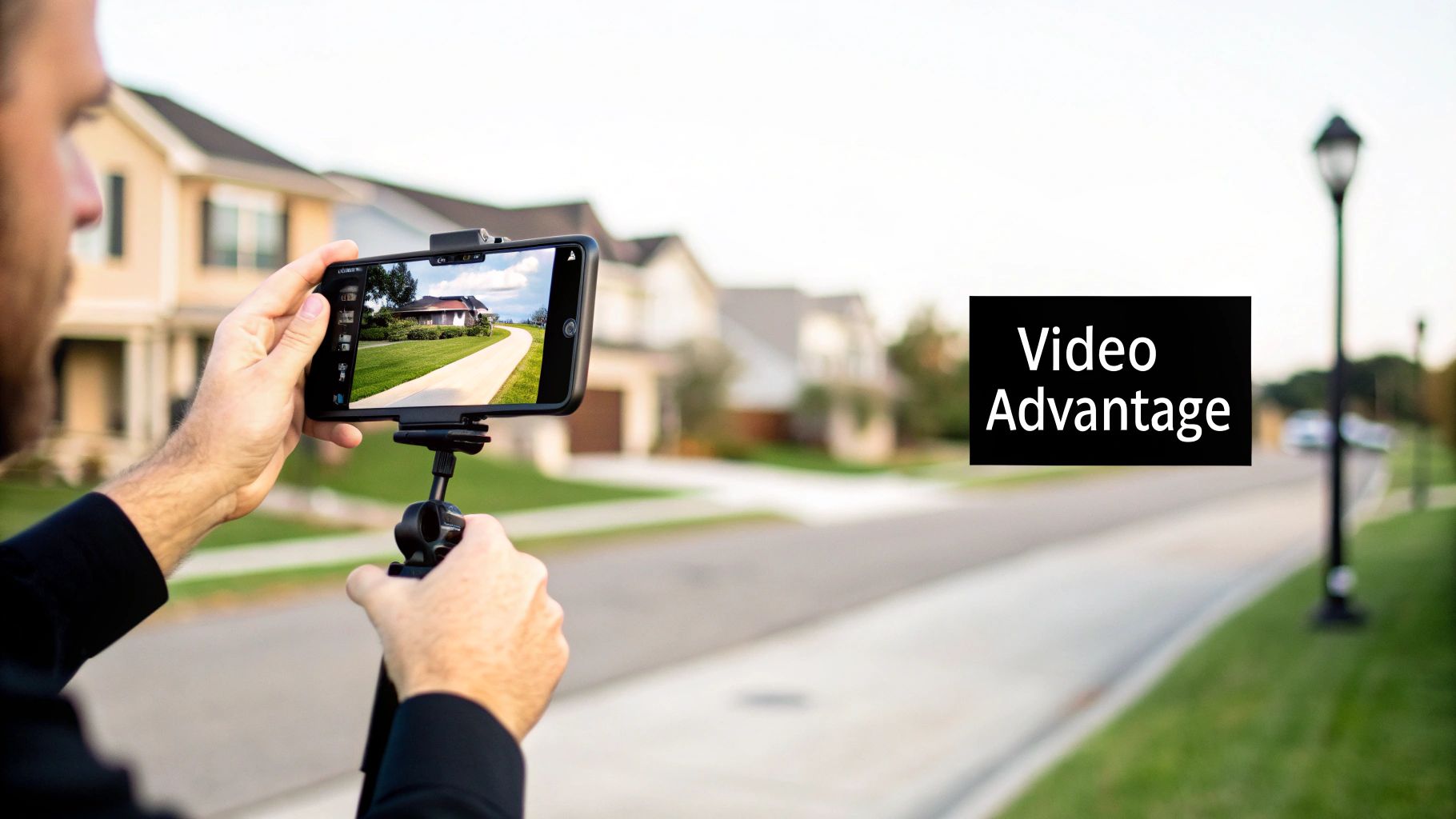
Homebuyers today don't just want to see pictures of a house; they want to experience it. They're looking for immersive video tours that give them a real feel for the space, the flow, and the kind of lifestyle a property offers before they even consider a showing. This is your chance to meet them where they are and set yourself apart.
The Numbers Tell the Story
The data on this is pretty clear. On social media, posts that include a video get a massive 1,200% more shares than posts with just text and images combined. Think about that for a second.
And while a good number of agents (63%) are using video in some capacity, there's a huge gap in the market. A shockingly small 9% of agents are consistently creating dedicated listing videos. We dig into these realtor marketing statistics and more in our full research report http://agentpulse.ai/blog/video-marketing-for-real-estate-agents, and the opportunity is massive.
This is where you can win. By simply making high-quality video a core part of your listing strategy, you immediately jump into the top tier of agents in your area.
When you lean into video, you're not just selling a property; you're selling a vision. You build trust and authority with every click of the play button, creating a brand that buyers and sellers will remember.
It's More Than Just a Listing Tour
A smart video marketing for real estate agents strategy goes way beyond a simple walkthrough of the house. You should be thinking bigger and building a whole library of content that cements your status as the local pro.
Consider creating videos like:
- Neighborhood Guides: Show off the best parks, coffee shops, and schools in the communities you know and love.
- Market Updates: Take complex market data and break it down into short, easy-to-digest video clips.
- Client Testimonials: There's nothing more powerful than having your happy clients share their success stories on camera.
Every video you create works for you around the clock, acting like a digital handshake to build rapport with potential clients. This approach makes you the go-to resource, so when someone in your town thinks "real estate," they think of you first.
Laying the Groundwork for a Killer Real Estate Video
Great videos don’t just happen. They’re built on a solid plan long before you ever press record. This is the pre-production phase, and honestly, it’s where you win or lose the battle for your audience's attention.
Every video you make needs a clear job. What’s the goal here? Are you trying to get immediate showing requests for that hot new listing? Or are you playing the long game, building trust as the go-to expert for a specific neighborhood? Nailing down your purpose from the start informs every single decision that follows, from the script to the final call to action.
First, Know Your Audience
Once you have a goal, you need to picture who you're talking to. A video for a first-time homebuyer will have a completely different vibe than one aimed at a luxury investor. What are their biggest headaches? What do they dream about? What questions are they too afraid to ask?
For example, if you’re targeting a young family, you’ll want to highlight the home's proximity to great schools and parks, maybe with some upbeat, energetic music. On the other hand, a video for a downsizing couple should probably focus on single-level living and low-maintenance features, set to a quieter, more relaxed tone. When you tailor your style, you connect with viewers on an emotional level and show them you get it.
Pick the Right Type of Video for the Job
Not all real estate videos are created equal. You need a mix of content in your arsenal to keep your audience hooked and hit different strategic goals. A smart video for realtors plan should include a variety of formats that cover the entire client journey.
Think about adding these to your rotation:
- Listing Walkthroughs: These are your bread and butter. But don't just show empty rooms—guide the viewer through the home's story. Help them actually picture their life unfolding there.
- Client Testimonials: There's nothing more powerful than social proof. A quick, genuine video of a happy client talking about their experience builds instant trust and credibility.
- Neighborhood Guides: This is how you become the local authority. Showcase the best coffee shops, parks, and hidden gems that make a community feel like home.
- Market Updates: Break down all that confusing market data into short, easy-to-understand video clips. This proves your expertise and gives real value to potential buyers and sellers.
A huge mistake I see agents make is just listing off features—the granite countertops, the number of bedrooms. Your script needs to tell a story about the lifestyle the home offers. You're not just selling a house; you're selling Saturday morning coffees on the patio and cozy family movie nights in the living room.
Script a Simple Story
You don't need a Hollywood screenplay, but you absolutely need a basic script. Having a simple framework keeps you from rambling and ensures you hit all your key points in a way that tells a compelling story. It's your video's roadmap.
A simple, effective script can be broken down like this:
- The Hook (3-5 seconds): Open with a stunning shot or an intriguing question to stop the scroll.
- The Introduction (10-15 seconds): Quickly introduce yourself and the property, leading with its most unique selling point.
- The Story (30-60 seconds): This is your walkthrough. Focus on the lifestyle benefits of the key areas, not just a list of features.
- The Call to Action (5 seconds): Tell them exactly what to do next. "Comment 'TOUR' below for a private showing" or "Click the link in my bio to see the full listing."
Following this simple plan is what turns a random collection of clips into a powerful marketing tool that actually gets results.
Shooting Professional Videos with the Gear You Have
Let’s get one thing straight: you don't need a Hollywood film crew or a five-figure camera to create a listing video that grabs attention. That high-powered camera you carry around in your pocket every day? It’s more than enough to shoot stunning, professional-quality video that makes buyers feel like they’re right there.
The secret isn’t spending a ton of money on gear. It’s knowing how to use what you’ve got. With just a few smart, affordable accessories, you can turn your smartphone into a serious real estate filmmaking tool. This small investment pays off big time, helping you avoid the shaky footage and muffled audio that immediately screams "amateur."
Your Budget-Friendly Video Toolkit
You can put together a killer mobile video kit for less than you'd pay for a single professional photoshoot. I’d consider these three items non-negotiable if you want to create clean, smooth, and clear videos that look and sound incredible.
A Gimbal Stabilizer: This is your secret weapon against shaky hands. A gimbal uses tiny motors to keep your phone perfectly steady as you walk and pan through a property. The result is that buttery-smooth, cinematic footage that looks incredibly professional.
A Lapel Microphone: Nothing ruins a great video faster than bad audio. A simple lapel mic (also called a "lavalier") clips right onto your shirt and plugs into your phone. It ensures your voice comes through crystal clear, even if you're in a big, echoey room.
A Portable LED Light: You can't always count on a home’s built-in lighting to be flattering. A small, portable LED light panel is a game-changer for brightening up dark corners, getting rid of harsh shadows, and giving your shots a polished, high-end look.
Honestly, the difference these three simple tools make is huge. They solve the most common problems that make real estate videos look unprofessional, giving you an immediate edge. This foundational gear knowledge is just as important as the more advanced techniques we cover in our guide on real estate photography tips.
Before you even think about hitting that record button, it’s crucial to have a plan. This simple chart breaks down the first three steps.
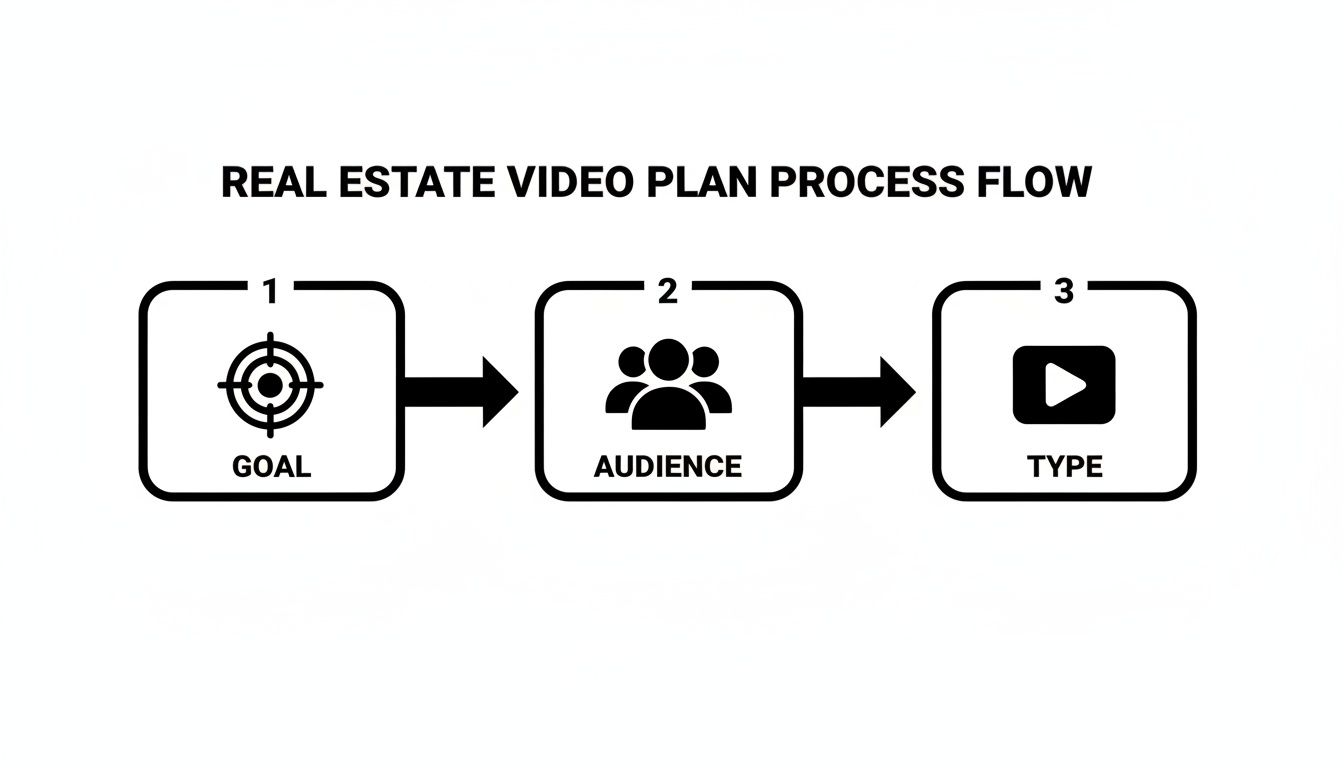
When you know your goal, audience, and video type from the start, every single shot you take will have a clear purpose.
Mastering Your Shot List
Think of a shot list as your video's blueprint. It’s what keeps you from wandering aimlessly through a house, hoping you get everything. A well-planned list saves you a ton of time on-site and guarantees you won't get back to your office only to realize you forgot to film the killer master bathroom.
One of the biggest mistakes I see agents make is starting their video tour inside the house. You have to start outside. An inviting exterior shot sets the scene and establishes that all-important curb appeal. From there, you can guide the viewer right through the front door for a natural flow that feels just like a real-life showing.
To ensure you capture a complete and engaging tour, I recommend building your shot list around these essential shots. It provides a logical flow that tells a compelling story about the property.
Essential Shot List for a Compelling Listing Video
| Shot Type | Description | Purpose |
|---|---|---|
| Exterior Wide Shot | A broad view of the home's front, yard, and street. | Establishes context, shows curb appeal, and sets the scene. |
| The Grand Entrance | A smooth, continuous shot moving through the front door. | Creates a welcoming feeling and mimics an in-person arrival. |
| Room Pan | A slow, steady pan (left to right or right to left) of each main room. | Shows the room's full size, layout, and flow. |
| Detail Shot | A close-up on a high-value feature (e.g., granite countertops, a fireplace). | Highlights key selling points and communicates quality. |
| Window View | A shot from inside looking out a key window. | Connects the interior to the exterior and showcases the view. |
| Feature Focus | A shot focused on a unique element like a pool, deck, or garden. | Showcases lifestyle benefits and special amenities. |
Having this kind of structure is more than just a good idea—it directly impacts your bottom line. Listings with video get a staggering 403% more inquiries than those without.
And in a market where 70% of buyers want a video tour, simply providing one puts you way ahead of the competition. It's a powerful tool for engaging serious buyers before they even set foot on the property.
Polishing Your Footage: The Editing Magic
Alright, you've got all your clips. Now comes the fun part: stitching them together into a story that sells. This is where the raw footage becomes a powerful marketing tool. And don't worry, you don't need a Hollywood editing studio or a film degree to do it well.
Honestly, the best tools are often the ones sitting right on your phone. Most agents I know get everything they need for a fantastic listing video done with a simple mobile app.
My Go-To Mobile Editing Apps for Agents
When you're busy, speed and simplicity are everything. You need an app that lets you trim clips, drop in some music, and add your branding without getting bogged down in complicated settings. Here are a couple of my favorites that get the job done fast.
- CapCut: This app is a powerhouse, but it's surprisingly easy to learn. You can quickly trim your clips, add clean transitions between rooms, overlay text with your contact info, and even pull from a huge library of royalty-free music.
- InShot: Another solid choice. InShot is brilliant for resizing your video for different social media platforms with just a few taps. It also makes adding your logo as a watermark or punching up the colors a total breeze.
Both of these will let you assemble a professional-looking video in under an hour. If you want to dive a little deeper, we've got a full rundown of the best real estate video editing software you can check out.
The goal here isn't to win an Oscar. It's to create a clean, engaging tour that flows well, sounds good, and tells people what to do next. A simple, well-edited video that you actually finish is always better than a complicated project that never sees the light of day.
One Video, Many Platforms: Getting the Format Right
This is one of the biggest mistakes I see agents make. They shoot a beautiful video, but then they post the same wide-screen version everywhere. A YouTube video looks clunky and small on Instagram Reels, and you lose your audience's attention immediately.
To look like a pro, you need to match the aspect ratio to the platform. It's simple once you know the rules:
- Vertical (9:16): Think tall and skinny. This is for Instagram Reels, TikTok, and YouTube Shorts. It fills the whole phone screen and is non-negotiable for grabbing attention on these platforms.
- Landscape (16:9): The classic widescreen look. Perfect for YouTube, your own website, and for embedding in an email newsletter. It just feels more cinematic.
- Square (1:1): A great middle-ground for the main feeds on Instagram and Facebook. It takes up a ton of screen real estate as people are scrolling, which is exactly what you want.
The good news? Most mobile editing apps have presets for this. You can edit your video once, then export it in all three formats without much extra work. This little step makes your video for realtors content look like it truly belongs on each platform.
Don't Forget the Call to Action
Your video has one job: get a potential buyer to take the next step. A beautiful video with no clear direction at the end is just a missed opportunity. You have to tell viewers exactly what you want them to do.
A strong Call to Action (CTA) is direct, easy, and gives people a reason to act now. Don't just flash your phone number on the screen. Give them a specific command.
Try one of these—they work wonders:
- For Showings: "Ready to see this kitchen in person? Comment 'TOUR' below, and my team will send you the private showing schedule."
- For Info: "Tap the link in my bio to see the full photo gallery and get all the details on this incredible home."
- For Engagement: "What's your favorite part of this house? The backyard oasis or the modern fireplace? Let me know in the comments!"
Make sure you say your CTA out loud and also display it as on-screen text for the final 3-5 seconds. This is how you turn passive viewers into active leads.
Getting Eyes on Your Video to Attract More Buyers
You can create the most stunning video tour in the world, but if the right buyers don't see it, it's just a great video sitting on your hard drive. Once your masterpiece is edited and ready, the real work begins: getting it in front of people. This is where your video starts pulling its weight, bringing in views, sparking conversations, and generating real leads.
It’s not enough to just post it once and cross your fingers. You need a simple, repeatable promotion system that ensures every video gets maximum exposure across multiple channels.
Play by Each Platform’s Rules
Every social media site has its own algorithm and its own language. A "post it everywhere" approach just doesn't work. To get found by a local audience, you have to tweak your captions, hashtags, and titles for each platform.
Take YouTube, for instance. It's not just for cat videos; it's the second-biggest search engine on the planet. Think of your video upload like a blog post.
- Write a Searchable Title: Instead of just "123 Main Street," try something like, "Stunning 4-Bedroom Home for Sale in Northwood | 123 Main Street Tour." This is exactly what people search for when they're looking for homes in a specific area.
- Go Deep in the Description: Use that space to write a detailed summary of the property. Weave in keywords naturally, like "Northwood real estate," "family home with a pool," and, of course, your contact info.
- Tag It Right: Add specific tags like the city, neighborhood, zip code, and key features (e.g., #AustinRealEstate, #NorthwoodHomes, #PoolHome).
Over on Instagram, it's a different game. The visuals do the heavy lifting, but hashtags are how new people discover your content. Use a blend of broad and hyper-local hashtags. For that same Northwood home, you could use: #NorthwoodAustin #AustinHomesForSale #NewListingAustin #ATXRealEstate. This mix captures people looking all over Austin and those zeroing in on that specific neighborhood.
I see so many agents make the mistake of using the same 30 generic hashtags on every single post. Your hashtags need to be specific to the property and location. This tells the algorithm exactly who to show your video to, leading to better views from people who are genuinely interested.
Squeeze Every Last Drop of Value from Your Video
Your video's job isn't done after its initial social media debut. One of the best parts about creating video for realtors is how versatile it is. That one piece of content can be sliced, diced, and repurposed across all your marketing channels.
First, embed the video directly onto the property’s listing page on your own website. Right away, your listing becomes far more engaging than the competition's photo-only pages. A video can dramatically increase how long people stay on your site, which is a big thumbs-up to search engines.
Next, make that video the star of your next email newsletter. An email with a video thumbnail is practically begging to be clicked—far more than one with just text. It’s a fantastic way to reconnect with your database and show them something new and exciting.
Finally, chop up your main video into short, compelling clips for digital ads. A punchy 15-second clip of the amazing kitchen or the backyard oasis makes for a killer ad on Facebook or Instagram, driving traffic straight to the full listing. This strategy ensures your hard work reaches the widest possible audience and keeps the inquiries coming.
Got Questions About Real Estate Video? We've Got Answers.
Even knowing all the benefits, I get it—jumping into video can feel like a big leap. It's totally normal to have some questions or hangups holding you back. Let's clear the air and tackle some of the most common ones I hear from agents.
"But I Hate Being on Camera!"
This is probably the number one concern I hear. The great news? You don't have to be the star. For listing videos, it’s often better if you’re not. A clean voiceover lets the home be the main attraction, which is exactly what buyers want to see.
"Isn't Professional Video Expensive?"
Another big worry is the cost. While you can spend a fortune on a Hollywood-level production, you absolutely don't have to. A simple, professionally-shot one-minute video might run you anywhere from $200 to $800.
But as we've talked about, you can get incredible results with just your smartphone and a couple of smart, cheap accessories. The real secret is knowing where to put your money for the biggest impact—and that's almost always a good microphone for crystal-clear audio.
"What's the Deal With Music Licensing?"
This is a huge one, and it trips up so many people. You can't just grab the latest hit song and slap it on your video. That's a surefire way to get a copyright strike and have your video taken down. You need to use royalty-free music.
Thankfully, this is easier than ever. Here are a couple of simple options:
- Your Editing App: Most modern video editors, like CapCut, come with a built-in library of music that's completely safe to use.
- Music Services: For a small monthly fee, platforms like Epidemic Sound or Artlist give you access to massive libraries of incredible, high-quality tracks.
My advice? Always use licensed music. It protects you from legal headaches and ensures your video won't get flagged or muted on social media. It's a small, simple step that prevents major problems down the road.
"How Long Should My Real Estate Videos Be?"
The golden rule here is to make it as short as you can while still telling a compelling story. The "right" length really depends on where you're posting it.
Here’s a quick breakdown that works for most agents:
- Instagram Reels & TikTok: Keep these short and snappy. Aim for 15-30 seconds, max. You have to earn every second of attention on these platforms.
- YouTube & Your Website: You can go a bit deeper here. For a full property tour, 1-3 minutes is the sweet spot. It's long enough to show off the key features without losing the viewer's interest.
Ultimately, your goal is to respect the viewer's time. Get to the good stuff quickly, deliver the value, and always finish with a clear call to action.
Tired of coordinating shoots and paying for editors? AgentPulse turns your listing photos into stunning, cinematic videos in just minutes. Simply upload your images, and our AI does the rest. Create your first video for free today at AgentPulse.